Digital Film Technologies (Film and Television Production)
Level 5 QQI Award Film and Television Production 5M18519
Duration
This is a Full-time One Year course which runs from September to May (4 days each week) Monday to Thursday. Exact details of the timetable will be given out to students during the induction process prior to class commencement in September.
Overview
Course Code: DFT5
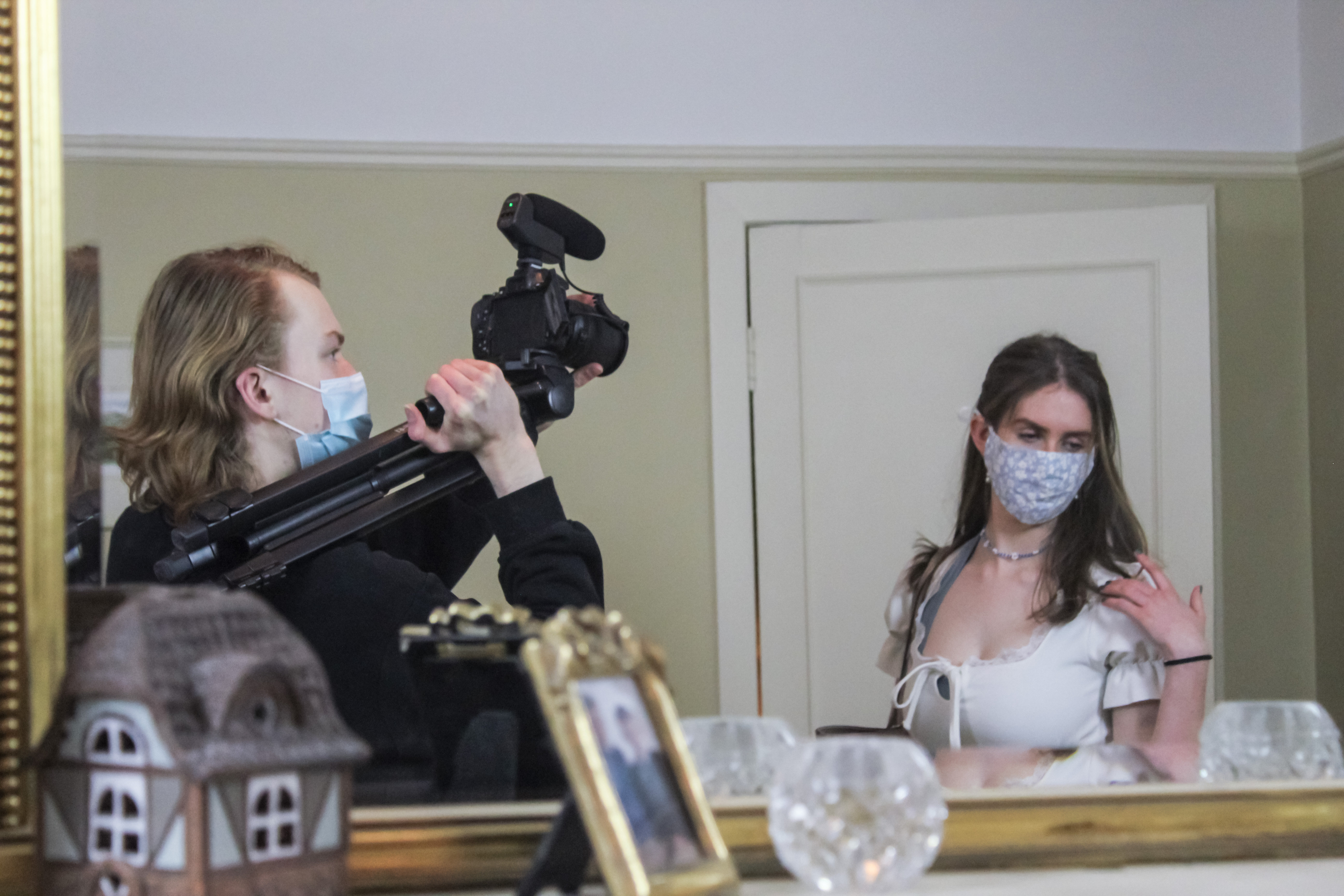
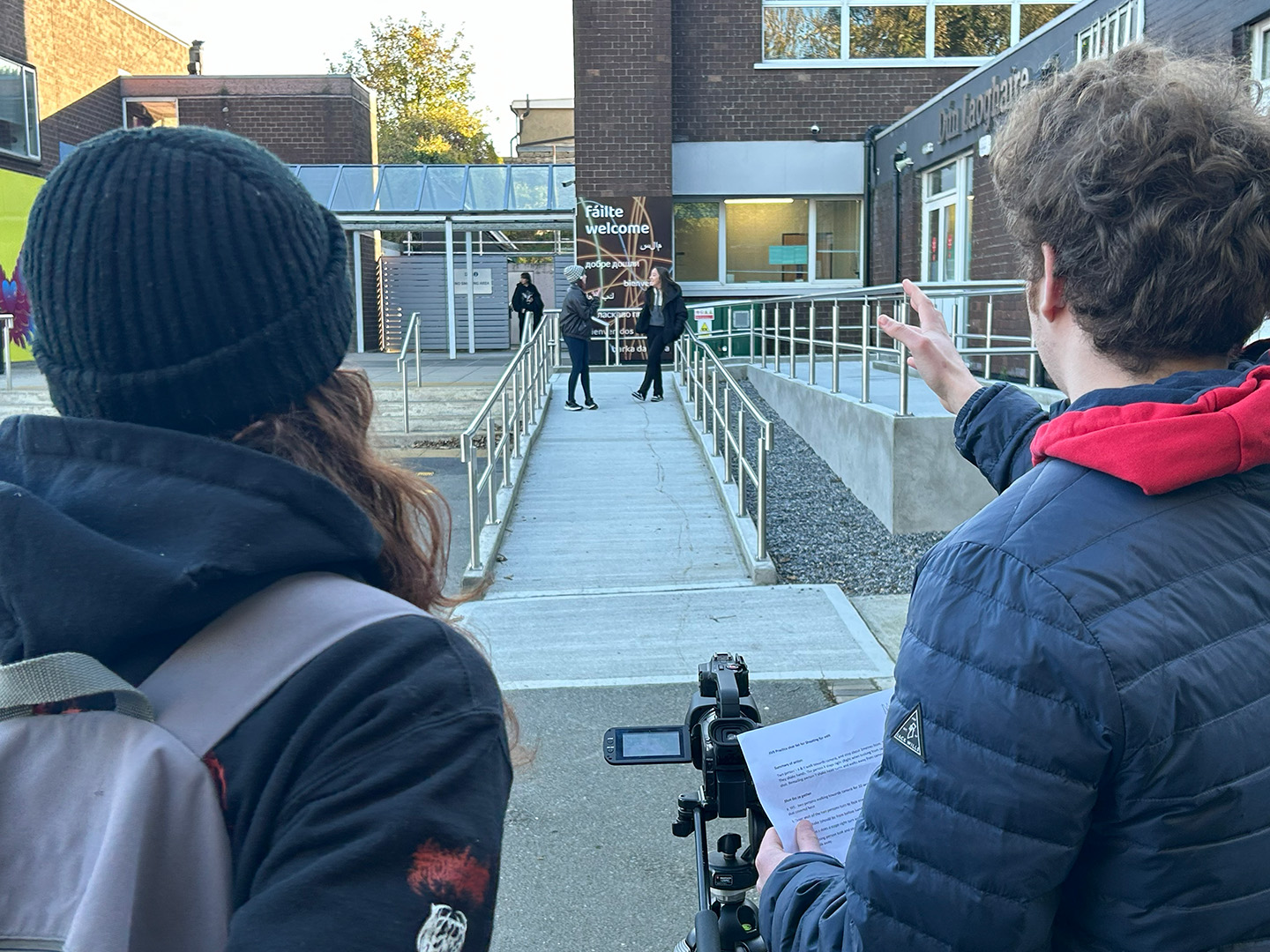
This course is an excellent foundation for Film and Television degrees in; IADT (National Film School), DCU,, TU Dublin, and other Higher Education Institutes and Universities. Students will acquire practical skills in both Film and Television Production, including single-camera production, non-linear-editing (NLE) for film and video. Sound engineering for tv & film and Research skills will enhance their production skills with sound and content creation.
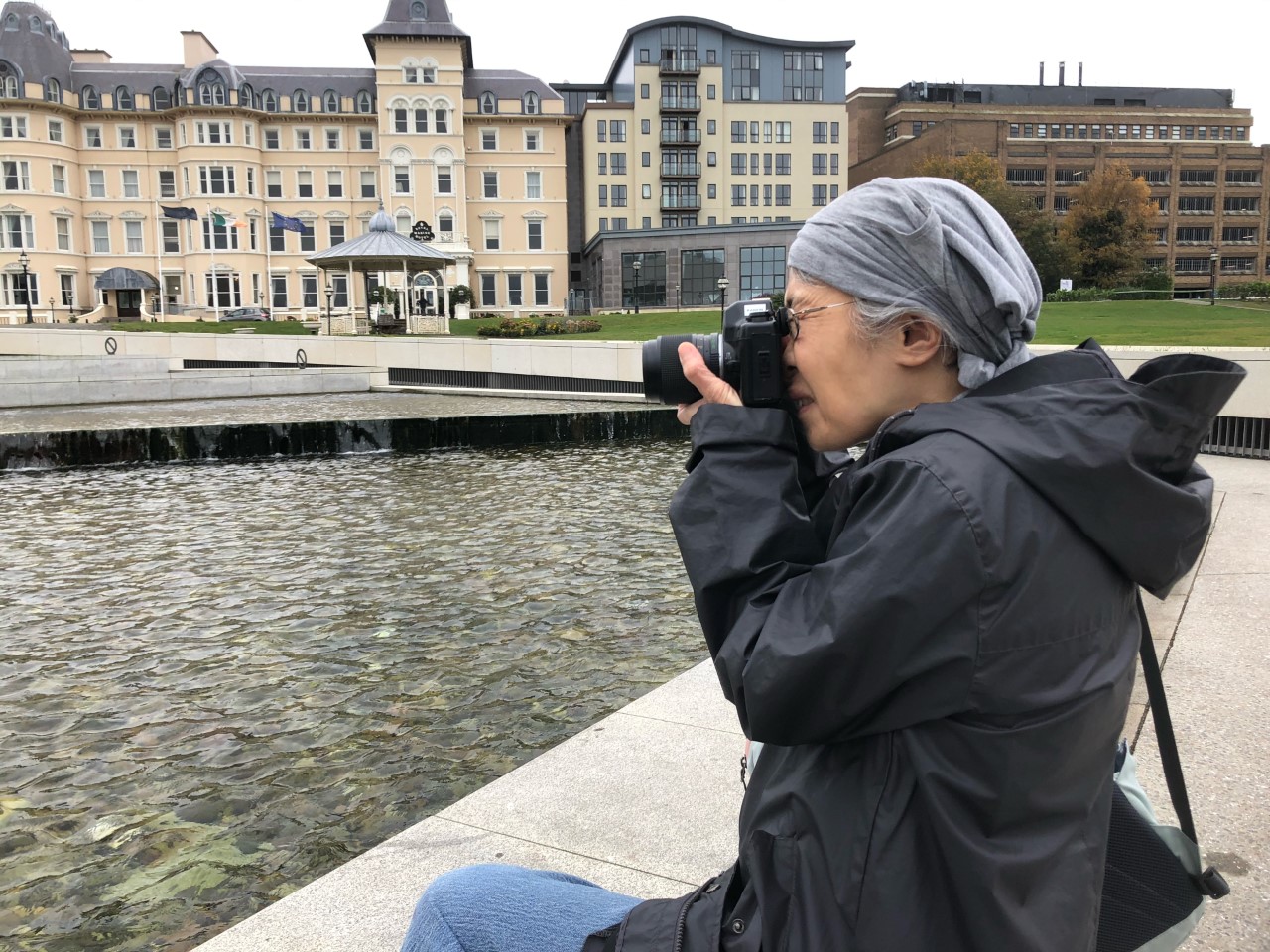
Students on this course will be based using the Adobe Creative Cloud NLE systems. Digital Photography will compliment their production skills and visual storytelling and through the study of Media Analysis, students gain knowledge of how the relationship between the producer, the financing, and the audience impact one another. These skills will be evidenced in a portfolio of work including Film, Audio and Photography. This portfolio of work may be used for progression applications to degree programmes elsewhere.
What will I study on this Film & Television Award?
- Developing Short Film and Television works
- Research Skills
- Script Writing including Pitch, Treatments & Industry Standard Script Layout
- Storyboards & Shot Lists – understanding the narrative role of shot types
- Production Schedules & Call Sheets and Budgets
- Single Camera Production, electronic field production techniques
- Working with Cameras & Digital Video – Iris, Focus, lens and movement
- Three-point lighting & using light and shadow for dramatic effect
- Working with Audio, Audio Mixing and Engineering
- Understanding the roles and responsibilities of various type of production crew
- Shooting own short film and clips
- Non-Linear Video Editing withAdobe Premiere Pro
- Special Effects including using Green Screen & Effect Controls Panel
- Colour Correction and Grading
- Audio Correction.
- Graphics & Titles
- Digital Photography
How we read Films and Television
How the Industry works
Distribution & getting your work noticed
How festivals and competitions can be accessed
APPLY Directly for this course here
Entry Requirements
One of the following:
- Leaving Certificate (LC Established, LCVP, LCA) or equivalent
- A Full Level 4 QQI Award (or equivalent)
- For mature applicants (aged 21 or over) - appropriate experience will be considered in lieu of formal qualifications.
- Applicants whose first language is not English require level B1 competency on the CEFR language framework. Applicants may be required to undergo English language testing to establish their language competency.
Certification
- Level 5 QQI Award Film and Television Production (5M18519)
Special Features
This course is supported by FIT, which offers students the opportunity to acquire essential skills to gain employment. Students are given training in job interview techniques and CV preparation.
Free full suite of Adobe Creative Cloud Software for all students on this course for one year to facilitate portfolio and assessment work. Training in Adobe Premiere Pro, Adobe Audition and Adobe Lightroom within course subjects.
All DFEi students are provided with an M365 account, which gives them access to the tools and resources needed to deliver assessment work while attending their course. M365 Apps include Word, PowerPoint, Excel, outlook and OneDrive.
Graduates of this course will have a portfolio of Film Video and Radio/Podcast and Photography material.
Work Experience
Students will be required to undertake a period work placement in an organisation connected to their vocational area during the academic year. Work Experience is mandatory for all of our full-time Level 5 courses. Students are required to source their own work placement but will be assisted in this by the work experience teacher. The work placement is usually for a period of 10 days or a minimum of 60 hours. Students usually find the work experience element of the course to be invaluable and should bear in mind that a successful work placement can sometimes lead to further opportunities.
Additional Information
Assessment
Assessment techniques will be used to assess the knowledge and skills that students will have achieved on successful completion of modules:
- Student Record
- Collection of Work
- Assignments
- Examination (Written)
- Project
- Skills Demonstration
All assignments are submitted electronically. Therefore all students need access to a device such as a computer/laptop.
A full major award is granted on passing the relevant eight components. On successful completion of each component, you will be awarded a pass, a merit or a distinction grade. See www.qqi.ie for more details
Visit our youtube podcast channel here
Progression Opportunities
DFEi: Graduates may progress to the Level 6 QQI Advanced Certificate in Television and Digital Film at DFEi.
Elsewhere: Graduates are eligible to apply through the CAO and/or the Higher Education Links Scheme for entry to year one of a range of higher certificate and degree programmes, at Universities, Institutes of Technology and Technological Universities using their full QQI Level 5 major award. Places are not guaranteed in these Institutes and are subject to students meeting certain criteria. It is the students' responsibility to consult with the relevant HEI for information on the admissions process and any specific entry requirements. Students may also refer to the individual HEI prospectus or may also refer to the QQI FET section of the CAO website. www.cao.ie
Examples of CAO progression opportunities are listed below.
This course has a strong record of progression with graduates going on to study Media at DCU, TU Dublin and IADT.
Progression Examples
BA Film - National Film School (DL843)
BA Television - National Film School (DL844)
BA New Media Studies (DL837)
BA English and Media Studies (DL849)
Film (Joint International programme) (DL856)
BA Photography and Visual Media (DL833)
Dún Laoghaire Institute of Art, Design and Technology - www.iadt.ie
BA Media Studies (MH109)
BA Arts (MH101)
BA Pscyhology (MH106)
Bachelor of Social Science (MH107)
Maynooth University - www.nuimaynooth.ie
BA Film and Broadcasting (TU983)
BA Photography (Portfolio) (TU976)
Technological University Dublin (City) - www.tud.ie
BA Media Production and Digital Arts (TU982)
Technological University Dublin (Tallaght) - www.tud.ie
BA Creative Digital Media (TU706, TU981)
Technological University Dublin (Blanchardstown) - www.tud.ie
BA in Film and Television Production (DK864)
BA Creative Media (DK863, DK769)
Dundalk Institute of Technology - www.dkit.ie
BA Communication Studies (DC131)
BSc Multimedia (DC133)
Dublin City University - www.dcu.ie
BSc TV and Media Production (SE208, SE212)
South East Technological University (Carlow Campus) - www.Setu.ie
BA Arts Journalism (GY119)
BA Arts (Film and Digital Media) (GY127)
BA Arts Global Media (GY135)
Galway University - www.nuigalway.ie
Bachelor of Arts (Honours) in Film and Documentary ( AU615)
Atlantic Technological University - Galway City
Career Paths
Graduates usually choose to advance to further studies, while others have gained employment in the Audio Visual Media Production, Television and Film Industries. They may also pursue careers as content creators for website and social media clients, communications offficers, podcast, radio and other broadcast media.